
This is eighth characteristic of the 9 Characteristics of a Productivity Ninja….
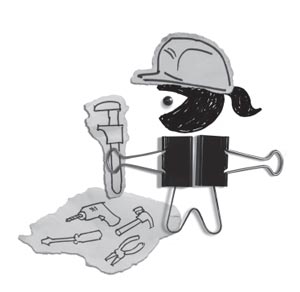
In our list of the characteristics to aspire to be, one that underpins and strengthens so many of the others is preparedness. Zen like calm in the heat of the battle is only possible if you’re well prepared. Agility is only possible if you’re starting from a position of being prepared and ready to react immediately. And you’re only ready to be ruthless if you’ve got the energy. Being prepared is about practical preparation as well as mental preparation.
A weapon-savvy Ninja knows the added sense of control they feel when tackling a problem or project with the right tools. There used to be a time when being organised, focussing on the stationery or the geeky apps was considered nerdy or uncool. Well, the time has come to unleash your inner geek.
It’s time to maintain practical systems that will mean you’re always prepared to tackle whatever comes your way. It may seem less cool than just ‘going with the flow’, but there is power in stocking up on stationery, power in investing time in the right systems and power in attacking your work from the position of being well prepared.
As well as being physically well prepared, we need to be mentally well prepared too. This of course means mindfulness, but it also means looking after our most precious resource: our own attention and energy. As such, we need time to be off duty too. Perhaps being off duty involves a long Facebook binge or surfing crap on the internet. Perhaps it involves going out with friends or taking time to focus your attention onto something completely different (or onto nothing at all).
Many people are pressured by their bosses to stay late in the office. I have talked to a lot of people who say that even though no one feels like there’s anything to do, let alone feels ready to do anything, they still stay – for about five minutes after the boss has gone home. If you’re in a job where you’re under this kind of peer pressure, it needs to change. We’ll work on that together. As for your boss, well, perhaps buying them a copy of this book would be a start!
‘Crunching’ is a term that means buckling down, eyes on the deadline or conscious of the busy period ahead. It means not looking after yourself and not coming up for air. Crunching is a great short-term tactic when the going gets tough. But studies show that sustained periods of ‘crunch’ only lead to diminishing returns. In the film Wall Street, Gordon Gecko, played brilliantly by Michael Douglas, uttered the now legendary phrase, “Lunch is for wimps”. It stuck in the collective consciousness and you’ll still hear it used to this day. Well, lunch is not for wimps. But preparedness is for Ninjas.
Preparedness leads to magic it’s difficult to say why taking lunch or short breaks during the working day always brings you so quickly back to ruthless focus and your ‘A’ game. It just happens that way. Periods of rest are vital for preparedness. Next time you spend any meaningful length of time during the hours of nine to five not working and move your attention onto something completely different, just watch what happens; I’ll bet that on that day, you’ll get more done, not less. It’s like a magical little secret.
Different shifts in gear seem to work for different people, but it’s as much in the body as in the mind. A five-minute blast of fresh air is infinitely more effective than ten minutes screwing about on the internet with your work still open in the background. The trick is to find the thing that works for you. As we look more at managing your attention and momentum later in the book, we will revisit this very unusual but startlingly effective secret.
Subscribe to Think Productive’s free Time Management newsletters Click here to subscribe. Think Productive offer time management training courses to help you be a Productivity Ninja.
Stealth & Camoflage
This is characteristic 4 of being a Productivity Ninja….
Protecting your attention spans and keeping focussed is hard to do. This is where the Ninja needs to employ a bit of old-fashioned stealth and camouflage. If you’re in the limelight, you might get caught in the crossfire. One of the worst things you can do is make yourself always available. It’s an invitation to some of your biggest enemies: distraction and interruption. Here are a few examples:
As well as protecting our attention from others, we must recognise the need to protect our attention from ourselves. We can be our very own worst enemy. There’s a phrase in software development called ‘Going Dark’ which refers to the time when a developer is ‘in the zone’ with their programming and has subsequently stopped answering emails or responding to other communications. They can be extremely difficult to find but there’s probably some amazing productivity happening… somewhere.
If your attention and focus is likely to be impeded by unlimited access to the internet and you’re likely to be tempted by its millions of distraction possibilities (and who isn’t?!), disconnect once in a while. Yes, a productivity book is telling you to turn off the internet! If I turn off my wifi connection for two hours, I know there will be no new email arriving during that time, and that it will be annoying enough having to fiddle around with turning the connection back on to keep me from doing so.
The art of camouflage is an important skill in keeping us productive. We may be off the radar, but that certainly doesn’t mean we’re not working. Quietly hiding away is not for everyone and it’s not something you can’t do all the time. But it does focus the mind on the task at hand and avoids so many of the interruptions and distractions that we place in front of our own eyes.
Finding other people to do your work for you is a great way to get more done. The problem is that the world is pretty scarce with people who actually want to do your work for you! Hence, a bit of stealth delegation is in order. This is unorthodox for a number of reasons, but consider first that you are unlikely to be able to claim credit for your actions and also that things may turn out differently to how you had imagined.
If you’re prepared to tolerate that, it’s a great tactic. Better still, work out from your project list which of the projects you could afford to have others work on in different ways, or that you care least about. These are the ones to consider stealth delegating. Here are three common forms of stealth delegation. As a Ninja, you might well discover your own techniques, too.
Setting boundaries with meetings and your email etiquette is one of the topics we cover in our Think Productive Productivity workshops www.thinkproductive.co.uk.
“The mind is for having ideas, not for holding them.” – David Allen
This is the first in a series of posts defining the Characteristics of a Productivity Ninja….
So you want to be a Productivity Ninja? The first characteristic you need to nurture is Zen-like Calm. Good decision-making comes from the ability to create the time and space to think rationally and intelligently. The Ninja realises this, remains calm in the face of adversity, and equally calm under the pressure of information overload. You might not believe this, but it is entirely possible to have a hundred and one things to do and yet still remain absolutely calm.
How do we beat stress and remain calm? I answer this question more fully in my book as well as the practical skills needed for Ninja-mastery of email, tasks, projects and meetings. Here are a few basic principles:
Be sure that you’re not forgetting important items by keeping all of your support information in a system, not in your head. Be sure that you’re not distracted and stressed by what you could be forgetting – by using a system instead of your own head as the place where information and reminders live.
You need to have trust that whatever systems you use will work. There is a danger that additional stress will be created by the uncertainty of not knowing whether your systems will help you deliver. Sticking to what you trust and trusting what you stick to are crucial. The way to foster this trust and promote the Zen-like calm you need is to regularly consider not just your work, but the process of your work too. Briefly but regularly reviewing how you work will help you to promote clearer thinking in the work itself.
Realise that you’ll never get everything done. That’s not the game anymore. Be safe in the knowledge that you’re in control, selecting the right things to do. This does not mean ‘don’t be ambitious’; it does mean that if you have a sense of ambition, you’ll probably experience some times in your life with more on your plate than you can physically do. The truth is that worry, stress and negative thought patterns are tiring and completely unproductive.
Eat porridge. Keeping fit and healthy will not only reduce stress and give your brain the focus and energy it needs to produce clearer thinking and decision making and it means you’ll look hot. It’s a win-win-win! There are hundreds of theories about why physical fitness positively impacts the brain. I discuss a few of them in Chapter 3 of the book.
“I don’t have the time to be organised,” is a common objection I hear when coaching clients towards Productivity Ninja status. But the truth is that when we experience periods of ‘flow’ – the times in our day or week when we’re most productive – the last thing we want to do is be thrown off track by being unable to find some crucial piece of information or by not having the tools we need readily available.
Usually, those people who naturally resist the idea of being organised are the very same people who experience the greatest mindset shift from getting their paperwork, projects, email inbox and everything else under control. It’s immensely calming if you do it regularly, but probably even more so if you don’t normally experience it very often. The realisation that after each battle comes a period of rest and realignment, and the strategic value of preparedness for the battles to come, are central to the Ninja philosophy.
This is an edited extract from How to be a Productivity Ninja. Read more buy the book….
 Last week was the launch of “How to be a Productivity Ninja”, a culmination of the last three years of thinking and getting things done from Graham Allcott. Adopting the mind-set of a Ninja offers very useful ways to approach your work. This week we thought we’d give you a taste of the nine characteristics of a Productivity Ninja described in the book….
Do you have a system to store the information, actions, task lists, checklists and files? What could be improved to make it easier to access? Zen like calm is an ability to remain focused and not be stressed by all the things you’re not doing.
Saying ‘no’ to as many distractions as possible. Could you afford to be more ruthless in your focus?
Knowing what tools to use, but being clear that the tools are there to save you time, not provide distractions. Do you have good communication systems in place and is it easy to track who does what?
Get out of the chaos once in a while. Are there times when people working alone, away from the limelight, might be more productive.
Challenge the status quo. Think how would Nelson Mandela make it, or how would Amazon.com make it? Take inspiration from unusual (as well as usual) places.
Have good systems to help you react and respond quickly. Are there opportunities to discuss the storm during the calm before it? Plan ahead!
Ask youself good questions and avoid stress. Are you a good listener – to yourselves and to others?
Knowing that rest, relaxation and good organisation skills are important. If you’re over-stretched, can you see light at the end of the tunnel? If not, change it!
Last but no means least, one of the loudest messages in the book is that in order to be a Productivity Ninja, you don’t have to magically become a superhero. Superheroes only exist in the movies and you’ve got real work to do, back here on planet Earth.
You might be surprised to learn that to be a productivity ninja is not like being a superhuman. Essentially we are human beings not human doings. Humans make mistakes and we shouldn’t try to be perfect.
Aiming for perfection is often the quickest way to get stuck. The important thing is to finish, not to be perfect. Celebrate your mistakes – use them for good. Adopting a Productivity Ninja mind-set is a great way to create a safe space to innovate and ultimately, to change the world!
“How to be a Productivity Ninja” is available on Amazon buy your copy today. The e-book is being sold in aid of READ International.
This is Part 1 of a series of posts describing the characteristics that will help you to become a Productivity Ninja. Look out for new posts everyday this week. How many characteristics do you relate to? Please leave your comments below…


